
✍️ 由ChimelongOceanKingdom.com团队撰写 — 珠海主题公园写作者与回头客 · 🗓️ 最后更新:2026年11月 · ⏱️ 约9分钟阅读
อาณาจักรมหาสมุทรชิเมลอง is one of the most photogenic theme parks in Asia — a 63-metre whale shark statue on a lake, the largest acrylic window ever built, a firework-lit nightly finale and eight themed zones that each carry their own palette. It is also a park with specific light behaviour, specific crowd rhythms and a few rooms where the difference between a great photo and a phone-noise photo is knowing where to stand and when. After many visits with serious cameras and many with phones, this is our complete shot list: the ten best angles, hour by hour, with the settings that work.
Quick ethics note first: the animal halls enforce no flash, no tapping glass, no feeding — politely and constantly. Every shot in this guide works within those rules. And for the practical frame around all of this (which hours are emptiest, when the light is best), the 一日行程 以及 month-by-month guide are the companions to this page.
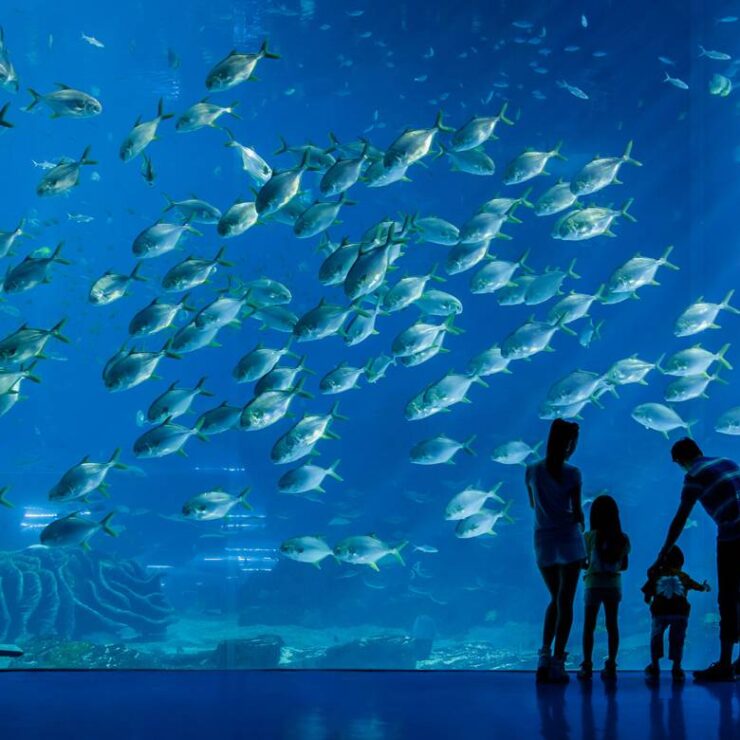
🐋 1. The Whale Shark Window (9:00–10:30 or after 16:00)
The park’s definitive photograph: a human silhouette in front of the giant acrylic window with whale sharks cruising past at arm’s length. When: within ninety minutes of opening, or after 16:00 when tour groups thin — midday turns the window into a wall of phone screens. Where: shoot from about three metres back at kneeling height, subject between camera and glass, exposing for the tank (tap-to-expose on phones, spot metering on cameras). Settings: phones — night mode off, HDR on, 2× lens for compression; cameras — f/2.8-ish, ISO 1600–3200, shutter 1/125+ to freeze a passing shark.
💡 提示: the window’s right-hand third is quieter than the centre all day — same whale sharks, one-third the elbows. The full hall strategy is in our Ocean Wonders guide.
🦈 2. The Whale Shark Statue (blue hour, after the fireworks)
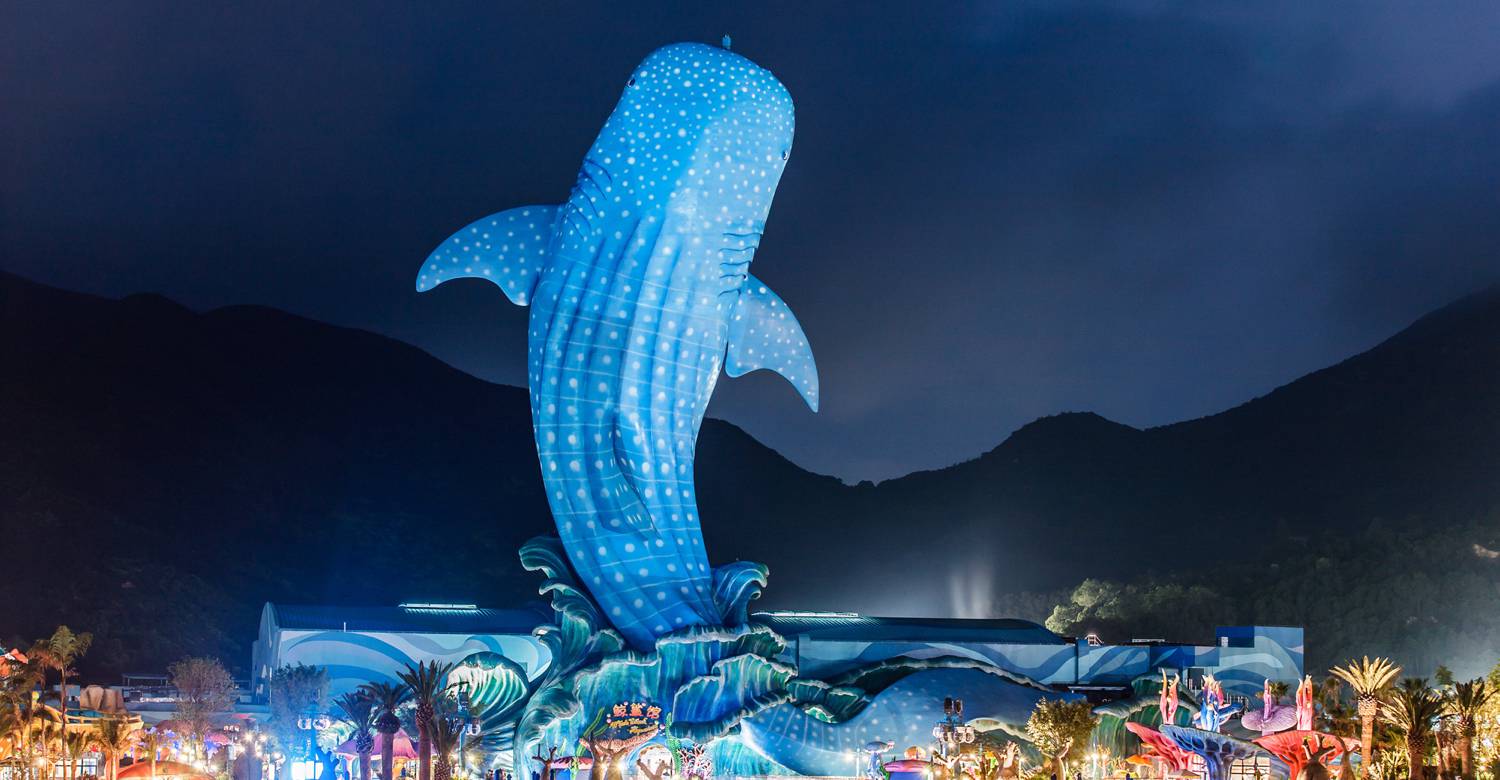
The 63-metre statue across the lake is the park’s icon. Best two moments: golden hour from the lake’s eastern side, when the sunset silhouette works, and after the fireworks finale, when the statue is lit blue against the dark and the exit crowd has thinned — the single best closing shot of the night. Shoot from the lakeside plaza for the full-height frame, or from the west bank for statue-plus-fireworks-lake compositions.
🐬 3. Dolphin Bay Habitats (before 10:30)
The open dolphin pools photograph beautifully in morning light. The trick is patience: pick one vantage at the underwater window on Dolphin Island’s far side, wait one training session, and shoot burst sequences as the pod passes. Polarising filters cut the surface glare for above-water shots; the underwater window needs none. The zone’s details are in our Dolphin Bay guide.
🐧 4. Penguins at Eye Level (any time, Polar Adventure)
The penguin halls are the park’s most reliable indoor photography: constant light, close glass, endlessly performing subjects. Shoot at penguin eye level — kneel or use the low viewing panels — and let ISO climb rather than compensate with slow shutters; penguins are fast. The halls run 20–22 °C, so bring a lens cloth: the humidity fogges cold lenses in seconds.
🎪 5. The Parades (daylight and lights)
Two different parades, two different shots. The daytime Ocean Parade works best from a shaded curb with a mid-zoom (24–70 equivalent) as the floats pass — the float designs reward side angles, not head-on. The 光影之旅巡游 at night is the harder, better photo: tripods or stabilised phones, slower shutters (1/15–1/30), and position near the lake so the illuminated floats reflect. Show timing is in the 演出指南.
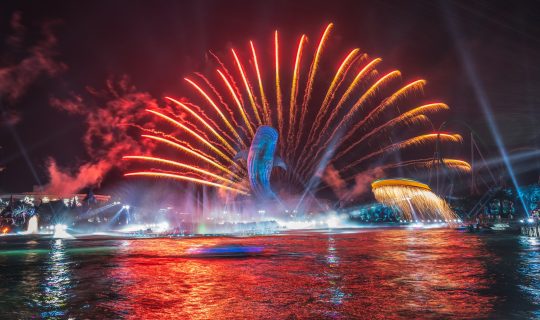
🎆 6. Symphony of the Ocean (≈20:00)
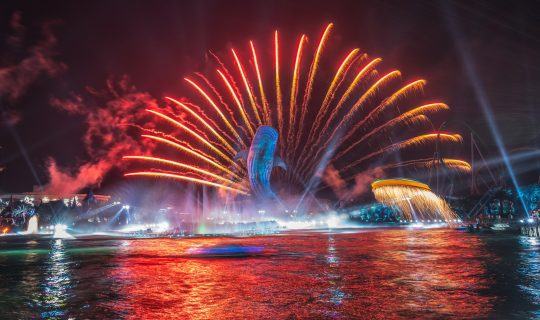
The finale — fountains, flame, drones, fireworks — is the park’s hardest and most rewarding shot. Position on the 是摄影师的选择(舞台对齐、喷泉细节);对面的 (the stage alignment is best) and claim it 30–45 minutes early. Settings: phones — use the dedicated night/handheld-long-exposure mode for the fountain-and-firework peaks, burst for the drone formations; cameras — tripod, ISO 200–400, f/5.6–f/8, 1–4 second exposures, and shoot the finale’s escalating second half rather than wasting frames early. One honest note: the first two minutes deserve naked eyes, not a viewfinder.
🦜 7. Parrot Coaster’s Flyover (all day, free)
The walkway beneath Parrot Coaster’s final swoop is the park’s best action shot: the green train skims overhead in flight position against the jungle canopy. Shutter 1/1000 freezes it; 1/60 pans it into a blur of colour. Shoot from the walkway side with the sun behind you mid-afternoon.
🪸 8. The Spaceship’s Coral Halls (any dry afternoon)
เดอะ ยานอวกาศชิมลอง next door holds the world’s largest living coral exhibit, and its halls are the most photogenic interiors in the resort — dim blue rooms with vivid coral walls. No-flash rules apply; fast primes (or phone night mode) and steady hands win here. The main tank walkthrough at low light is the second-best silhouette shot in the whole resort after the whale shark window.
🏰 9. The Castle and Ocean Avenue (morning)
The fairytale castle at Dolphin Bay’s edge photographs best in the first hour, front-on from the bay path before the crowds fill the foreground; the manta-ray canopy of โอเชียนอเวนิว works as a leading-line frame for arrival-morning shots at 9–10 am. Both are the park’s most forgiving compositions — good for the family-portrait duties.
🌅 10. Sunset Benches on Hengqin Sea (golden hour)
The lake’s eastern steps face the sunset behind the statue: arrive twenty minutes before sunset, order the sugarcane juice, and shoot the ten best light-minutes on the property. This is also the natural pre-finale staging area — the photography hour flows straight into the fireworks hour without moving your bags.
📱 Phone vs Camera: What Actually Matters
Honest verdict from many visits: a good phone covers 90% of this shot list, and the two places where a real camera earns its bag are the whale shark window (fast glass, high ISO) and the fireworks finale (tripod, long exposure). Everything else — parades, penguins, statue, castle — is light, position and patience, which cost nothing.
❓ 常见问题
我可以携带专业相机进入长隆海洋王国吗?
Yes — standard consumer and prosumer camera setups enter without issue, including interchangeable lenses. Tripods are practical for the fireworks if used considerately at the rail; flashes are prohibited in all animal halls, and drones are absolutely prohibited everywhere without special authorisation.
When is the whale shark window least crowded for photos?
The first ninety minutes after opening and the block after 16:00. Midday is the wall-of-phones hour. If you hold an early-entry hotel package, the 9:00 hour is the single best window of the day — our 行程 builds around it.
没有三脚架时,我该如何拍摄烟花?
Use the phone’s night or long-exposure mode, brace against the rail, and shoot the finale’s second half when the bursts peak. Keep burst mode for the drone segments, and put the phone down entirely for two minutes — the finale earns eyes as well as storage.
动物展馆里真的禁止闪光灯吗?
Yes, and it is enforced. Flash startles the animals and ruins everyone else’s view; the halls are lit for photography anyway. Raise ISO, steady your phone or camera against the railings, and shoot with the glass close to your lens to kill reflections.
What are the best photo stops inside the Spaceship park?
The coral exhibit halls and the main tank walkthrough — the two most photogenic interiors in the resort. Both are dim, both reward fast lenses and steady hands, and both are emptiest in the first hour after the 10:00 opening; the full plan is in our Spaceship guide.