

✍️ By the ChimelongOceanKingdom.com Team — Zhuhai theme-park writers and repeat visitors · 🗓️ Last updated: November 2026 · ⏱️ ~11 min read
Let us start with the honest price picture, because most park guides skip it: eating inside Chimelong Ocean Kingdom costs more than eating outside it, sometimes noticeably so. As a working budget, plan roughly ¥60–120 per person per meal in the park — the upper end at the bigger themed restaurants, the lower end at counter service and kiosks. That is fair value for theme-park dining anywhere in Asia, but families of four who wing it at 12:45 on a Saturday can easily double their spend through poor timing alone. Food strategy, in other words, is queue strategy.
We have eaten in every restaurant in this guide, several of them repeatedly across different seasons, and this post covers the full map: what each dining room feels like, what to order when the menus rotate, how the snack kiosks quietly add up, what you can legally bring through the gate, and where to eat well once you step outside — including the Hengqin oysters worth planning an evening around. If you have not yet planned the park day around which these meals hang, our ultimate guide is the place to begin, and our one-day itinerary slots lunch and dinner breaks into the ride schedule for you.
🍽️ The Restaurant Map at a Glance
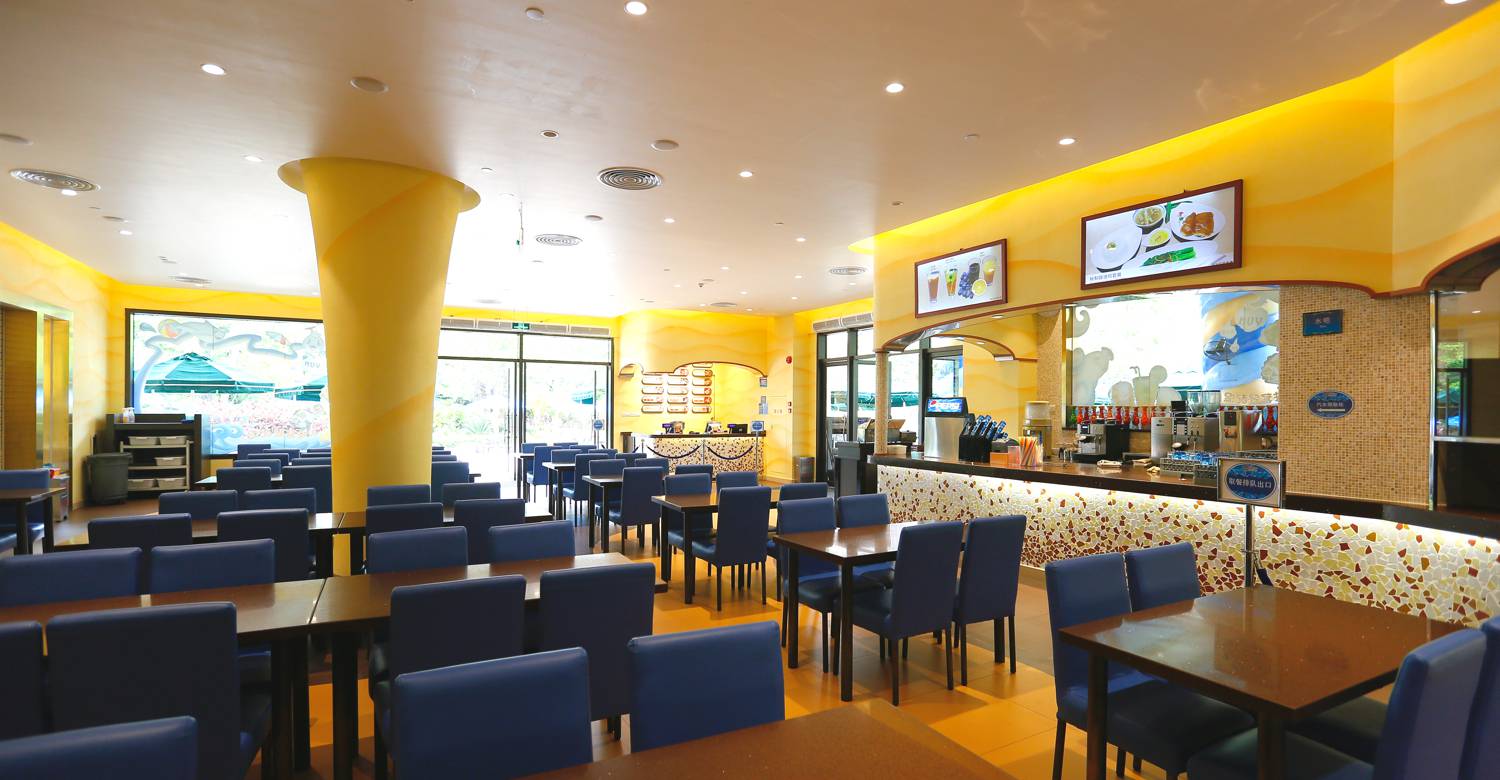
The park’s main restaurants each anchor a themed zone, so dining doubles as a rest stop with a storyline. Here is the quick map before we go deep on each:
| Restaurant | Zone | Vibe | What to order |
|---|---|---|---|
| ร้านอาหารปราสาท | Beside the 5D Castle Cinema | Fairytale castle dining room | Sit-down set menus; grab a window table |
| Restaurant by the Bay | สิ่งมหัศจรรย์แห่งมหาสมุทร | Aquarium-view dining beside the giant tank | Simple mains — the view is the headliner |
| ร้านอาหารโอเชียนอเวนิว | Ocean Avenue (entrance) | Fast and convenient | Rice and noodle bowls on arrival or exit |
| ร้านอาหารป่าฝน | ป่าฝนลอยฟ้า | Jungle canopy theming | Wok and grill plates after coaster laps |
| ร้านอาหารโอเชียนบิวตี้ | Mid-park loop | Quieter, ocean-toned room | Comfort plates and seafood-leaning sets |
| ร้านอาหารครอบครัวฮีโร่ | Polar Adventure | Family sets with polar theming | Sharing platters sized for kids |
| ร้านอาหารเมาท์วอลรัส | ภูเขาวอลรัส | Arctic mess-hall feel | A solid refuel between the water rides |
One honest note before the deep-dives: menus rotate with seasons and festivals, and bilingual coverage varies from wall charts to picture menus. Treat the “what to order” column as safe defaults rather than gospel, and treat every restaurant as an air-conditioned rest stop first and a meal second — in a park this size, the seating alone is worth planning around.
🏰 Castle Restaurant: Dinner Inside the Fairytale
The Castle Restaurant is the park’s most theatrical dining room, set in and around a fairytale castle beside the 5D Castle Cinema, with turrets, stained-glass tones and just enough sparkle to make children lower their voices for a moment. The kitchen leans toward sit-down set menus rather than quick counter trays, which makes it the natural choice for the “big meal” of the day — a birthday lunch, the last-night dinner, the celebration slot.
Our advice is to book or arrive early and aim for a window table; at peak lunch the room fills with strollers fast, and the atmosphere thins when you are queuing for it. We cover the room, the menu rhythm and the photo spots in our full Castle Restaurant review. Pair it with the 5D film next door and you have an easy two-hour indoor block that resets everyone’s patience for the afternoon.
🐟 Restaurant by the Bay: The Best View in the Park
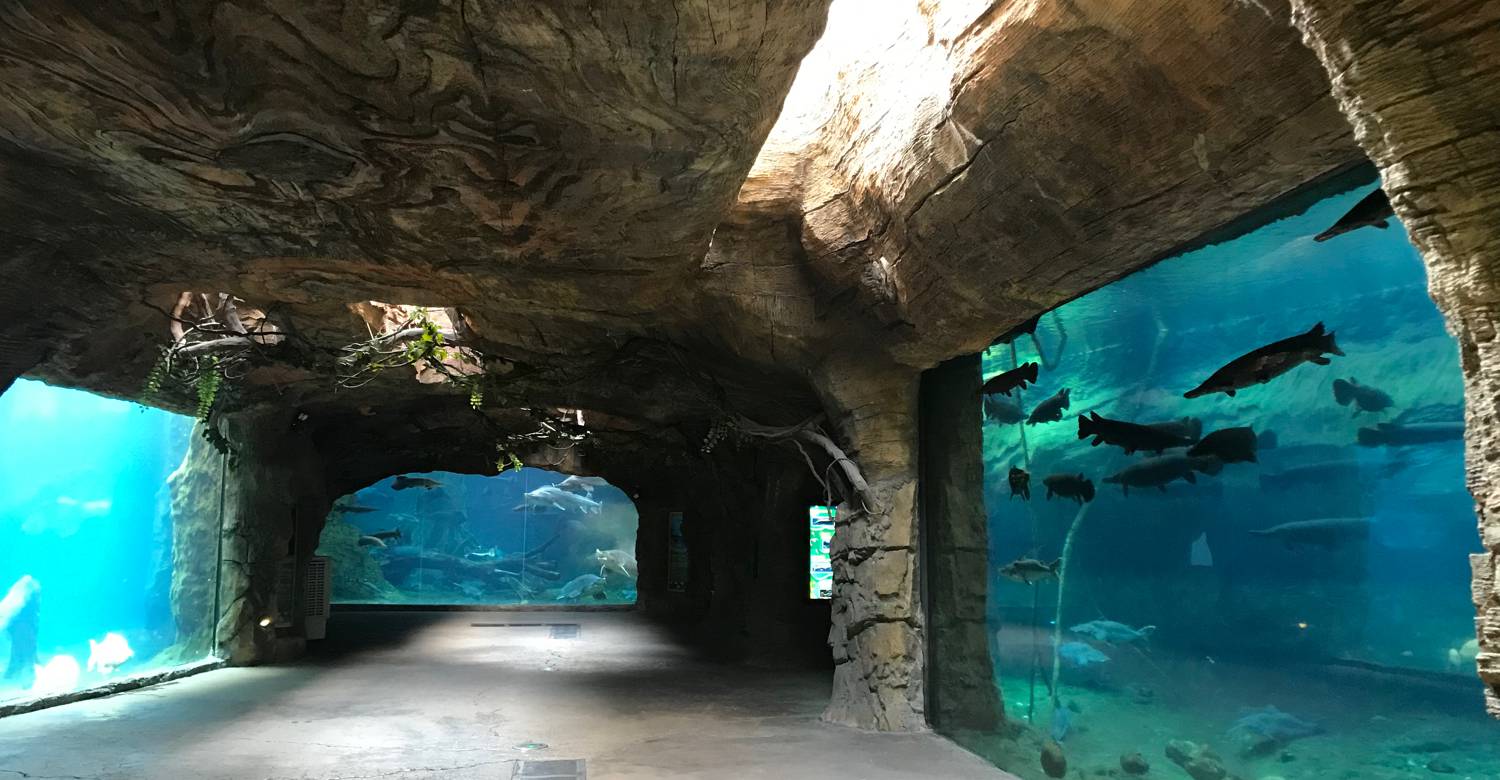
Restaurant by the Bay sits beside the Ocean Wonders building, and its party trick is unbeatable: dining tables face the aquarium’s main tank, so whale sharks and manta rays cruise past while you eat. No theme-park restaurant in Asia leans harder on its view, and the view absolutely earns it — we have seen visitors abandon halfway-through meals to press against the glass when the mantas glide by.
Because of that view, the room is the park’s most competitive lunch seat. Go early — arriving before 11:45 typically means a short or nonexistent queue and a window table — or slide in after 14:00 when the lunch rush has drained. Order simply: the mains are solid without being spectacular, and the honest read is that you are paying for the window, and the window is worth it. Our Restaurant by the Bay review covers seating strategy in detail, and the wider hall it overlooks gets the full treatment in our Whale Shark Aquarium guide.

🌴 The Rest of the Line-Up: Rainforest, Ocean Beauty, Ocean Avenue and More
เดอะ ร้านอาหารป่าฝน is the jungle corner’s answer to lunch: dense canopy theming, misty greens and a menu built around wok and grill plates that refill a coaster-rider properly. It is also one of the most atmospheric rooms in the park, and it pairs naturally with the manatee exhibit in the same zone — our Rainforest Restaurant review explains why we keep returning.

เดอะ ร้านอาหารโอเชียนบิวตี้ is the quieter, ocean-toned room we drift to when the entrance-area restaurants overflow — comfort plates and seafood-leaning sets in a calmer hall, ideal with tired children. The ร้านอาหารโอเชียนอเวนิว trades atmosphere for pure convenience right in the entrance boulevard: rice and noodle bowls served fast, which makes it the obvious first-meal stop when you arrive hungry at 10:30 or the last stop before the gate. Menus everywhere shift seasonally, so consider all of these dependable formats rather than fixed dishes.

Two more complete the map. ร้านอาหารครอบครัวฮีโร่ in Polar Adventure is built for exactly what its name promises — family sets and sharing platters sized for children, in a cool polar-themed hall that doubles as an air-conditioning break (our Hero’s Family Restaurant review has the full picture). And the ร้านอาหารเมาท์วอลรัส keeps an arctic mess-hall feel in the water-ride zone, where soaked families refuel between splashings.

🍦 Snack Kiosks and the Drinks Reality
Between the sit-down restaurants, the park runs a dense network of snack kiosks: popcorn carts shaped like ocean creatures, ice cream counters, corn cups, fruit skewers and the inevitable themed drinks in souvenir cups. Individually they are reasonable; collectively they are where budgets die. A drink here and a popcorn there across a ten-hour day can quietly add another ¥100–150 per person to the bill, so decide your treat policy before you enter rather than kiosk by kiosk.
The timing strategy matters more than the snacks themselves. Park restaurants saturate between roughly 11:45 and 14:00, with queue boards stretching out the doors and every table taken. Eat early lunch — before 11:45, which pairs perfectly with a morning of early entry — or late, after 14:00, when the rooms empty and the kitchen catches up. We time lunch this way even on quiet days now; the habit saves an hour of standing on the busiest days.
💡 Tip: flip your schedule on peak days — eat lunch at 11:15 while the queues are still forming, then take your midday break in the aquarium when everyone else is eating, and have your “lunch queue” slot filled with a kiosk ice cream at 14:30 instead. Same food, half the waiting.
🥪 Bringing Your Own Food: The Honest Policy
Chimelong’s bag check is real, but the policy is more relaxed than most legends online suggest: in our experience, light snacks and sealed water are generally fine — think crackers, fruit, biscuit packs and factory-sealed bottles. What the gate does not want is glass containers, alcohol, or anything requiring heating or preparation, and full picnic setups draw the line. Rules can and do shift with enforcement moods and seasons, so treat this as typical practice rather than a guarantee, and accept a polite “no” gracefully at the entry checkpoint if a particular item is waved through for others.
Used well, a small snack bag is a genuine budget tool: it covers the 15:30 hunger gap without a second restaurant stop and keeps children functional between meals. Sealed water bottles can be refilled at the park’s drinking fountains, which on a 32 °C July afternoon is both a money-saver and a small act of environmental virtue the park genuinely appreciates. Just carry out what you carry in — bins are everywhere, and the park’s animal halls enforce a strict no-feeding rule that loose snacks around enclosures would undermine.
💡 Tip: pack snacks in an open-topped pouch rather than a hard cooler — the entry check moves faster, nothing looks like picnic equipment, and you can refill sealed bottles at the water fountains inside instead of paying kiosk prices all afternoon.
👶 Kids’ Meals and the Allergy Conversation
Nearly every main restaurant offers child-sized portions or kids’ sets, usually with a themed plate or box that earns its keep as a souvenir once the noodles are gone. Hero’s Family Restaurant in the Polar zone is our default with a fussy eater, because the family sets let adults share plates with children instead of ordering separately. High chairs exist in the bigger rooms, and staff will help wrangle one if you ask — English varies, so pointing works.
Allergies deserve an honest paragraph: ingredient labeling in English is limited, and we would not rely on packaged or screen information alone for a serious allergy. The reliable method is to speak with staff at the counter before ordering — most restaurants can route you to a supervisor, and the kitchen will answer direct questions about nuts, shellfish and dairy far better than any menu card. Bring a translation card or a phone note in Chinese naming the allergy precisely, order simply, and avoid the sauce-heavy dishes where cross-contact risk hides. We travel with an epinephrine-pen family and would still eat in-park; we just never do it silently. For the broader young-family logistics — strollers, baby-care rooms, height rules — our family guide picks up where this section ends.
🍤 Beyond the Gates: Eating on Hengqin and in Zhuhai
Some of the best food connected to this trip is outside the park gates. The local specialty is Hengqin oysters — farmed in the estuary for generations and served grilled, steamed or fried at restaurants across the island and into Zhuhai. Even a park-focused trip can end with an oyster dinner, and in the cooler months the oyster season peaks alongside the weather. Wanzai seafood street, a short ride away on the mainland side of the channel, takes the same logic further: pick your seafood fresh, agree the price, and have it cooked to order — loud, chaotic and excellent.
The third option is the one most visitors underrate: the resort hotels themselves. The Penguin Hotel’s emperor-penguin buffet restaurant is a genuine experience — the dining room plays against a penguin habitat, and children behave accordingly — while breakfast at the flagship Hengqin Bay is the most composed meal on the island. If you are staying on Hengqin (our hotels comparison covers the choice), book at least one hotel dinner; it changes the rhythm of the trip. Payment is easy everywhere by then — Alipay and WeChat Pay with linked foreign cards, plus a little cash backup.
Budget the whole food day like this and it stops being a tax on the fun: ¥60–120 per person in-park meals, a modest snack allowance, and one splurge — the tank-view table, the castle dinner or the oysters beyond the gate. That is how we eat here, and after a dozen visits we would not change a bite. Start planning on our Chimelong Ocean Kingdom hub, and for the attractions you will work off between meals, our thrill rides guide และ aquarium guide have you covered.
❓ Frequently Asked Questions
Can you bring food into Chimelong Ocean Kingdom?
Generally yes within limits: light snacks and sealed bottles of water pass the bag check in our experience, while glass containers, alcohol and anything requiring heating do not. The policy is typical practice rather than published law, and enforcement can vary by gate and season, so keep your snack bag modest and be ready to finish or discard anything staff flag at entry. Refill sealed bottles at the park’s drinking fountains during the day.
What is the cheapest meal strategy in the park?
Combine a big early lunch before 11:45 with snacks you brought in, and let dinner happen outside the park or at a hotel buffet. Counter-service rice and noodle bowls sit at the low end of the ¥60–120 per-person range, kiosk treats add up quickly, and drinking-fountain refills beat souvenir cups. Families tell us this pattern alone takes ¥100 or more per person off a full park day.
Which restaurant has the best view?
Restaurant by the Bay, and it is not close — its dining room faces the main tank of the Whale Shark Aquarium, so whale sharks and manta rays swim past your table. Arrive before 11:45 or after 14:00 for the shortest queues and your best shot at a window seat. The Castle Restaurant wins on atmosphere, but the aquarium wall at Restaurant by the Bay is the single most memorable dining view on the island.
Are there vegetarian options at Chimelong Ocean Kingdom?
Yes, though the selection is pragmatic rather than adventurous: vegetable noodle and rice dishes, tofu plates, salads, fruit cups and the reliably safe sides at the counter-service restaurants appear across the park. English ingredient labeling is limited, so for strict vegetarian or vegan requirements, speak to staff at the counter — pointing and a translation app both work. The hotel buffets beyond the gate offer the widest vegetable-forward spread of anywhere in the resort.
How much should we budget for food per day?
Plan roughly ¥60–120 per person per meal in-park, plus a snack allowance of ¥30–60 if kiosks are part of the plan, which lands most adults around ¥150–250 per day inside the gates. Add one splurge — the aquarium-view table or a hotel buffet — and a realistic family food day sits comfortably under ¥1,000 for four. Bringing sealed water and light snacks shaves the top off that without anyone feeling deprived.


